
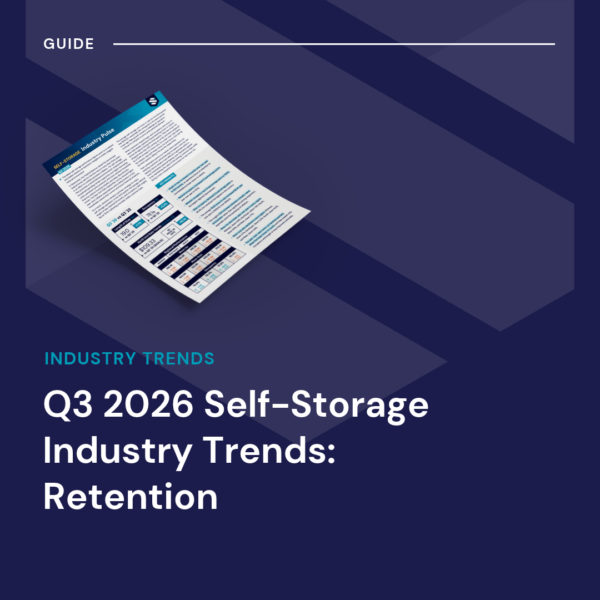
When new leasing volume becomes harder to generate, the customers already in your units matter more. The latest data from Storable’s Q3 2026 Pulse Report shows that growth in the current market isn’t just about adding new leases. It is also about keeping customers longer and protecting the occupancy those relationships create.
Download The Q3 2026 Self-Storage Industry Pulse
The latest report found the average length of stay reached 19.0 months, up 1.1 months from Q3 2025. National occupancy held at 78.1%, up 0.2 percentage points year over year. At the same time, the average 10×10 move-in rate was essentially flat at $109.33. Together, these figures point to a stable operating base rather than a market powered by strong pricing expansion or accelerating demand.
Operators continue to face a muted demand environment as US households remain under meaningful pressure. In August, core inflation was up 2.4% year over year, energy prices rose 16.3%, and mortgage rates remained above 7%. These conditions make moves and home purchases more expensive. Housing sales remain sluggish, and more households are postponing relocation across all income levels and generations.
That mobility lock-in affects both sides of the storage funnel. Fewer household moves mean fewer moving-related move-ins. They also mean fewer move-outs tied to home purchases, relocations, and other transitions. In Q3, move-ins fell about 10% from Q2 while move-outs rose 13.9%—a pattern consistent with the seasonal cooling that follows peak moving season. But the year-over-year picture shows a broader shift: move-ins declined 5.7% and move-outs declined 4.0%.
For operators, that creates a practical management agenda:
- Segment customers by purpose and track which use cases produce the longest stays.
- Review move-out reasons alongside housing activity, rate changes, service issues, and payment patterns.
- Watch length of stay and churn alongside occupancy and move-in volume.
- Make rate decisions with lifetime value in mind, balancing revenue growth against avoidable turnover.
The opportunity is not to wait for a broad-based return to peak mobility. It is to understand which customers remain, why they stay, and how local housing, migration, supply, and competition shape those decisions.
Read the full Q3 2026 Storable: Self-Storage Industry Pulse for the broader market and regional context shaping the quarter.