
Artificial intelligence was one of the most talked about themes across the show floor and conference programming at the SSA Fall Show this year. Last year, talk about AI in the industry was more forward looking. Instead of asking simple questions about AI, operators now were looking to dive deeper for the latest ways to use it to save labor, increase revenue, reduce risk or help employees act with greater confidence.
Another message that came through clearly: operators have more data than ever. Operators were interested in opportunities to turn that information into better decisions and faster action.
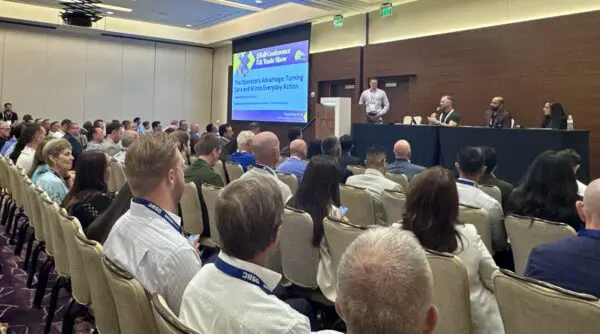
Storable explored these topics in depth with the panel The Operator’s Advantage: Turning Data and AI into Everyday Action moderated by Chuck Gordon, featuring Raheem Amer of MyPlace Self Storage, Andrew Capranos formerly of 10 Federal, and Anastasia Malagisi of Safeguard Self Storage.
Moving from reporting to insight
Raheem described the latest shift as moving from being “historians” of the business to using data to understand what needs to change next. At MyPlace Self Storage, the team uses live dashboards to monitor three core areas: lead volume, conversion rates and accounts receivable. The team looks for early indications of potential problems so they can solve them proactively. A decline in leads could point to a marketing or website issue. A conversion problem may suggest a sales or manager opportunity. An accounts receivable issue could signal a collections challenge.
Anastasia shared a similar perspective from Safeguard, where teams use dashboards to track rentals, reservations and inquiries. By comparing current performance with the same period in the prior year, the team sees what is happening throughout the month instead of waiting for an end-of-month report.
In one example, dashboard insights showed that two nearby properties were being affected differently by a competitor’s increased advertising spend. Seeing that shift early gave the team time to adjust its marketing investment and work toward its rental goals.
AI works best with the right context
The panel also reinforced that AI is only as useful as the information and context behind it.
Andrew discussed 10 Federal’s internal voice agent, which uses operational data to help customers with repetitive, high-intent requests such as payment questions, gate codes and access needs. The system continues to improve through call analysis and updates to its internal knowledge base.
Safeguard is taking a similar approach by testing AI voice agents in a controlled group of locations. The goal is to contain basic calls so live agents can spend more time on sales and higher-value customer needs, while closely monitoring the customer experience.
The practical takeaway? Start with a real business problem, define success and keep people involved. AI should support good judgment, not eliminate it.
The operator’s advantage is action
The strongest takeaway from SSA was not that every operator needs every new AI tool. It was that the advantage will go to teams that connect data, technology and human judgment in practical ways.
According to our panelists, that means focusing on a few metrics that truly drive the business, using live data to identify issues early and starting with repetitive workflows where automation can make an immediate difference. It also means measuring outcomes carefully, protecting sensitive information and keeping people involved in improving the experience.