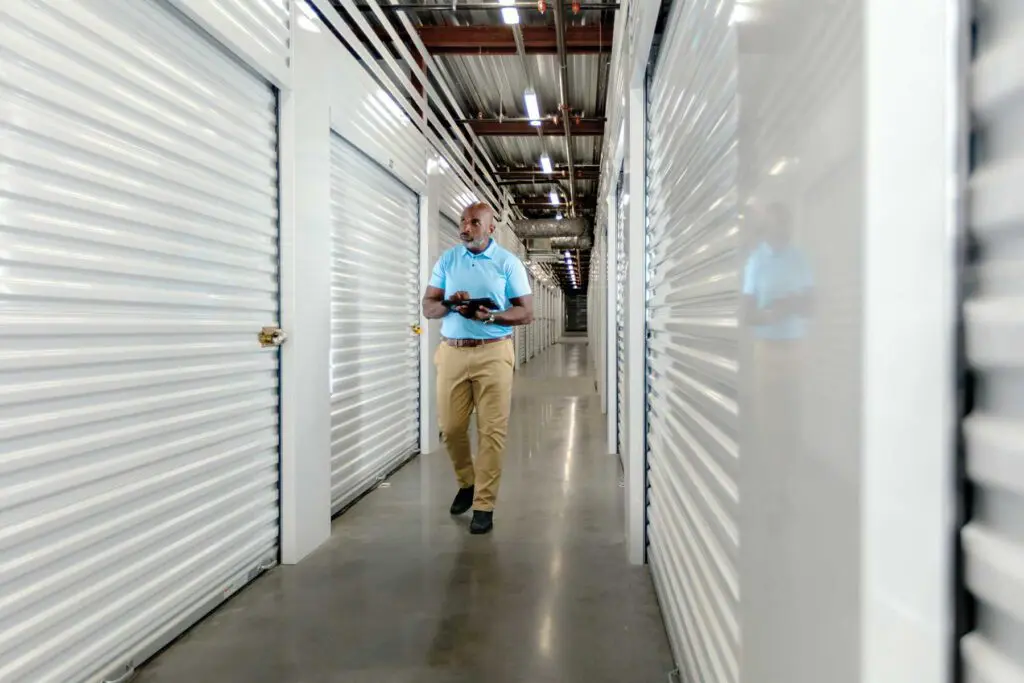

If you are a self-storage manager, chances are your day is full before it even starts. You are following up with leads, answering tenant questions, handling delinquency issues, walking the property, checking reports, responding to reviews, and putting out the small operational fires that always seem to pop up. That is exactly why conversations about AI and automation can feel a little unsettling. When people hear words like automation, they often assume the goal is to remove people from the picture.
In reality, that is not the most useful way to think about it. The best version of self storage manager automation is not about replacing managers. It is about reducing the repetitive work that keeps good managers from spending more time on the parts of the job that actually require judgment, communication, and customer care.
The point is not that AI will magically run every part of a storage business. It will not. But it can help save time, reduce friction, surface insights, and improve responsiveness when it is used with the right guardrails in place.
The role is changing, not disappearing
A lot of fear around AI comes from assuming it is meant to replace human judgment. But self-storage still depends on human judgment every day. Managers handle exceptions, read tone in customer conversations, make judgment calls when a situation is not straightforward, and understand the local context of their property in a way software cannot fully replicate.
What AI does well is different. It is especially useful for repetitive, time-consuming tasks like drafting routine messages, summarizing conversations, organizing information, and helping teams get to an answer faster. In other words, the mechanical part of the work gets smaller, while the judgment-heavy part of the work becomes even more important.
That is a much more realistic picture of where this is heading. The manager role does not go away. What is likely to change somewhat is what owners look for in a manager. Soft skills become more valuable as the role shifts to focus more heavily on oversight, service, problem-solving, and decision-making. When it comes to hard skills, storage managers will look to sharpen skills like writing effective prompts and creating custom agents to stand out from others.
Where automation can help today
The most practical AI use cases in self-storage are not futuristic. They are the ones that help managers move through everyday work faster and with less friction.
One clear example is lead response and customer communication. AI-powered chat and assistant tools can answer common questions, guide prospects through the rental process, and support tenant communication after hours, when your staff may not be available. If you want a concrete example, Storable’s Agent Assist is a good one. It is designed to answer questions about your facility, guide users through the reservation flow on your website, and provide general customer service support. With constantly improving chatbots handling basic customer inquiries, managers can spend more time serving customers that require face-to-face help or other pressing tasks.
Another useful area is summarization. Managers spend more time than they should recapping conversations, cleaning up notes, and trying to make sense of scattered information. AI is strong at summarizing interactions and documents, which can make handoffs cleaner and save time across the day.
Reporting is another big one. Many operators already have plenty of data. The challenge is turning that data into something useful quickly. AI can help reduce the burden of manual reporting by surfacing patterns, answering plain-language questions, and helping managers get to insights faster.
Even routine writing is a meaningful use case. Whether it is drafting follow-up emails, writing FAQ content, organizing internal documentation, or getting a first draft started, AI can help remove a lot of blank-page friction from work that still benefits from human review.
What is coming next
The next wave of automation is likely to go beyond simple drafting and summarization. More advanced AI systems are starting to move toward handling routine workflows more directly, helping operators respond faster, carry tasks forward, and route issues to the right place without adding more manual work.
In self-storage, the clearest near-term example is more integrated customer service and sales support. That can include using AI internally to onboard new tenants, answer common questions, help with lead follow-up, handle basic payment or account questions, retrieve information like gate codes, and launch workflows.
Over time, operators will likely see more automation expand into other areas like reporting, pricing intelligence, and back-office operations. As these use cases develop, they will still need thoughtful rollout and human oversight. None of that means managers become irrelevant. It means more routine coordination can happen in the background, while managers stay focused on the decisions and customer moments that matter most.
A little skepticism is healthy
If you are cautious about AI, that is not a bad thing. In fact, some skepticism is exactly what keeps businesses out of trouble. AI can be useful, but it still needs guardrails. It should not be making unsupervised decisions about payments, contracts, tenant accounts, or sensitive customer communications.
The operators who get the most out of AI will not be the ones chasing hype. They will be the ones using it to improve real business outcomes like faster response times, better customer experiences, clearer reporting, stronger revenue management, and less administrative drag. In other words, they rightly see AI as a powerful tool among many and not a total replacement for proven methods.
That is why self-storage manager automation should be viewed as support, not a threat. Done well, it helps good managers do more of what they are already best at and less of what drains their time.
If you want a broader, practical look at how AI can support storage operations, download our free e-book, A Practical Guide to AI Adoption for Self-Storage Operators.